

Raksha Bandhan (Rakhi) 2026: Wishes, Messages, Muhurat

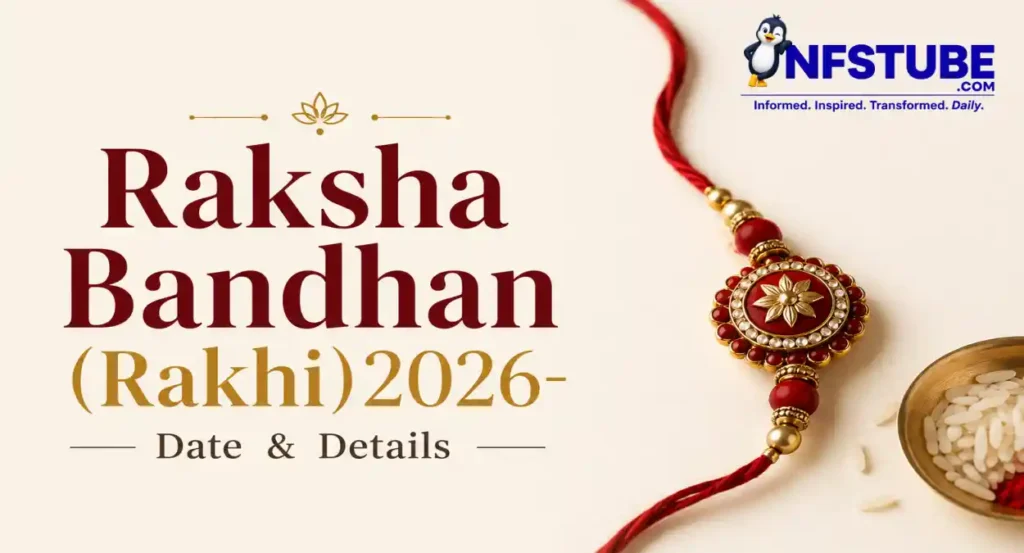


Raksha Bandhan 2026 will be celebrated on Friday, August 28, with the festival falling on Shravana Purnima. For New Delhi, the Rakhi tying muhurat is from 5:57 AM to 9:48 AM, while the Purnima Tithi begins at 9:08 AM on August 27 and ends at 9:48 AM on August 28.
The date may look confusing at first because Purnima begins a day earlier, but the festival is observed on August 28. For families planning the ceremony, the key details are the Rakhi date, city-specific muhurat, Bhadra timing and the traditional rituals associated with the festival.
Quick Highlights- Raksha Bandhan 2026
Raksha Bandhan 2026: Friday, August 28
Rakhi date in India: August 28
Purnima Tithi begins: 9:08 AM, August 27
Purnima Tithi ends: 9:48 AM, August 28
New Delhi Rakhi Muhurat: 5:57 AM to 9:48 AM
Bhadra: Ends before sunrise on August 28
Festival: Shravana Purnima
Main ritual: Rakhi tying, tilak, aarti, blessings and gift exchange
Rakhi 2026 Date: Is Raksha Bandhan on August 27 or 28?
This is the biggest point of confusion around Rakhi 2026. The Purnima Tithi begins at 9:08 AM on August 27. However, the Purnima continues into August 28 and ends at 9:48 AM that morning.
Raksha Bandhan is therefore celebrated on Friday, August 28. The date on which a tithi begins is not necessarily the date on which a festival is observed. Hindu festivals are determined using the prevailing tithi along with sunrise and other Panchang considerations.
Rakhi 2026 Date and Time: The Important Timings
For families preparing for the ceremony, the actual Rakhi timing matters more than the calendar date alone. The thread ceremony window on August 28 runs from 5:57 AM to 9:48 AM.
The total window is 3 hours and 51 minutes, giving families enough time to complete the traditional ceremony without rushing. However, the starting time can differ from one city to another because local sunrise and Panchang calculations are taken into account.
| Rakhi 2026 Timing | Details |
|---|---|
| Raksha Bandhan | Friday, August 28 |
| Purnima Tithi begins | 9:08 AM, August 27 |
| Purnima Tithi ends | 9:48 AM, August 28 |
| New Delhi Rakhi Muhurat | 5:57 AM to 9:48 AM |
| Muhurat duration | 3 hours 51 minutes |
| Bhadra | Ends before sunrise |
| Tithi | Shravana Shukla Purnima |
Also follow the local Panchang for the timings mentioned, for any change or update.
50+ Heartfelt RakshaBandhan Quotes & Messages
For Brothers
- “You’re not just my brother – you’re my forever hero. Happy Rakhi!”
- “Every Rakhi adds a twist to our story. Thank you for the madness, Bhai.”
- “Through fights, laughter, and late-night talks – you remain my rock.”
For Sisters
- “From childhood giggles to grown-up pep talks – you make life richer, Sis.”
- “Rakhi shines brighter with your smile in the frame.”
- “Thanks for being my built-in best friend.”
Traditional & Sanskrit Blessings
- “Yena baddho Balee raajaa…” (Sacred Raksha Stotra)
- “Raksha Sutra – the unbreakable thread of care.”
Long-Distance & Virtual Wishes
- “The courier has my Rakhi, but my heart’s been with you all year.”
- “No timezone can block our sibling bond. Happy Rakhi!”
- “A virtual aarti, a digital hug – love always finds a way.”
Creative & Modern
- “Sibling selfies. Matching Rakhis. Epic memories. Let’s go again!”
- “Here’s to fewer Netflix fights and more sibling snacks this year.”
- “Sibling goals since day one – and we’re still trending.”
Want to share instantly? Copy & paste these lines into your WhatsApp, Insta Stories, or handwritten Rakhi notes.
Top Raksha Bandhan Rakhi Gift Ideas (2025 Picks)
Curated with care – thoughtful, trending, and sibling-approved.
For Sisters
- Personalized jewelry sets
- Self-care kits & book club boxes
- DIY craft hampers
For Brothers
- Smart fitness bands & tech gadgets
- Grooming kits or quirky mugs
- Leather wallets & work accessories
For Kids
- Chocolate hampers
- Comic books & puzzles
- Cartoon-themed Rakhi combos
Eco-Friendly Options
- Plantable Rakhis
- Organic gift boxes
- Reusable bamboo sets
Why Bhadra Matters on Raksha Bandhan
Bhadra is an important consideration when determining the traditional Rakhi ceremony timing. In Hindu ritual practice, auspicious ceremonies are generally avoided during Bhadra. For Raksha Bandhan 2026, Bhadra ends before sunrise on August 28. This means it does not create a major daytime restriction for the Rakhi ceremony, making the morning window relatively straightforward for families following the traditional timing.
This is also why last year’s Rakhi timings should not simply be carried forward. The lunar calendar changes every year, and the relationship between Purnima, sunrise and Bhadra can shift considerably.
Also Read: IRCTC New Website Goes Live: Features & Faster Tatkal Booking
Why Raksha Bandhan Is Celebrated on Shravana Purnima
Raksha Bandhan is traditionally observed on the full moon day of the Hindu month of Shravana, known as Shravana Purnima. The festival celebrates the bond between siblings through a simple but deeply symbolic ceremony. A Rakhi is tied around the wrist, usually after applying a tilak and performing aarti. Sweets are exchanged, blessings are sought and gifts are given. Traditionally, the ceremony has been associated with protection, affection and responsibility, but the meaning has naturally expanded with changing family relationships.
For today’s generation, Rakhi is just as much about staying connected as it is about following ritual. A brother may be working in another city, a sister may be studying abroad, or both may have moved to different parts of the world. The ceremony still creates a reason to stop, reconnect and celebrate the relationship.
YouTube Video Suggestion-Raksha Bandhan (Rakhi) 2026: Date, Muhurat & Details
What You Need for a Traditional Rakhi Ceremony
The traditional Rakhi setup is surprisingly simple. A Rakhi thali usually includes the Rakhi, roli or kumkum, rice or akshat, a diya and sweets. The ceremony generally begins with a tilak, followed by aarti and the tying of the Rakhi. The siblings then exchange blessings and gifts, while elders may be included in the celebration depending on family customs.
Since the New Delhi muhurat begins as early as 5:57 AM, preparing the thali, Rakhi, sweets and gifts the previous evening can make the morning ceremony much easier. The festival does not require an elaborate setup. A clean thali, a Rakhi and a few meaningful moments together can be enough.
Also Read: Samsung Galaxy Z Fold 8 Launched: Price, Specs & Features
The Krishna-Draupadi Story Behind Raksha Bandhan
The story of Krishna and Draupadi remains one of the most widely remembered traditions connected with Raksha Bandhan. According to the popular account, Draupadi used a piece of cloth to tend to Krishna’s injured finger, after which Krishna promised to protect her.
The story is best understood as one of the traditional legends associated with the festival, rather than as the single historical origin of Raksha Bandhan. Hindu traditions contain several narratives involving protective threads, blessings and sacred bonds. What connects these stories is the same underlying idea: a thread representing care, goodwill, protection and responsibility between people. That symbolism has allowed Raksha Bandhan to evolve without losing its emotional core.
Rakhi Gifts Are Becoming More Personal
The Rakhi gift has changed considerably over the years. Traditional sweets and dry-fruit boxes remain popular, but younger siblings increasingly look for gifts that have some personal connection.
A sister might prefer jewellery, a book, a personalised accessory, skincare, a wellness product or an experience shared with her brother. For brothers, useful technology accessories, grooming products, watches, wallets, fitness products, books or hobby-related gifts can be better choices than a generic gift hamper. The strongest idea is personalisation. A modest gift linked to a childhood memory, favourite hobby or shared joke can feel considerably more meaningful than an expensive item selected without thought.
Also Read: 20 Young Indian Millionaires Shaping India’s New Wealth Story
What If Your Sibling Lives in Another City or Country?
Distance has changed the way Raksha Bandhan is celebrated, but it has not made the festival less relevant. A Rakhi can be sent several days in advance, while the actual ceremony can take place over a video call. Both siblings can prepare their own thalis, dress for the occasion and perform the ritual together even when they are thousands of kilometres apart.
A handwritten note, old photograph or small personal gift can make the package more meaningful. The technology may connect the two people, but it is the personal effort that makes a long-distance Rakhi feel like a real celebration. For younger families especially, this combination of traditional ritual and digital connection has become one of the most natural ways to celebrate.
Raksha Bandhan 2026 and the Lunar Eclipse
Another point attracting attention around the date is a partial lunar eclipse on August 28. The astronomical event and the Rakhi ceremony should not be confused, however.
An eclipse’s visibility depends on location, while religious practices associated with eclipses can also vary according to regional and family traditions. Therefore, the presence of an eclipse on the same calendar date does not by itself change the Rakhi muhurat for everyone. Families that follow specific eclipse-related customs should rely on the Panchang and traditions applicable to their location rather than general claims circulating online.
Also Read: OTT Releases to Watch: 9 New Movies and Shows
Raksha Bandhan 2026: The Answer at a Glance
August 28. The Purnima Tithi begins at 9:08 AM on August 27 and ends at 9:48 AM on August 28.
The Rakhi tying muhurat is 5:57 AM to 9:48 AM, and Bhadra ends before sunrise. Other Indian cities can have slightly different starting times, so families should use the timing applicable to their own location.
But beyond the calendar calculations, Raksha Bandhan remains refreshingly simple. A Rakhi, a tilak, a sweet, a blessing and a few unhurried minutes together are enough to celebrate a relationship that often begins in childhood and stays important for life.
Also Read: Mirzapur: The Movie 2026 Release Date, Cast & Trailer
Disclaimer: This article is intended for informational purposes only. For queries or corrections, please reach out via our Contact Form. Also refer to our Disclaimers & Transparency.
For the latest Tech, Entertainment, Fitness, and Lifestyle updates, follow NFSTUBE on Instagram, Facebook, YouTube, & X(twitter) for daily updates.